
Bringing Experimentation to the Ad Context Protocol
How AI is helping humans shape an open protocol for agentic advertising
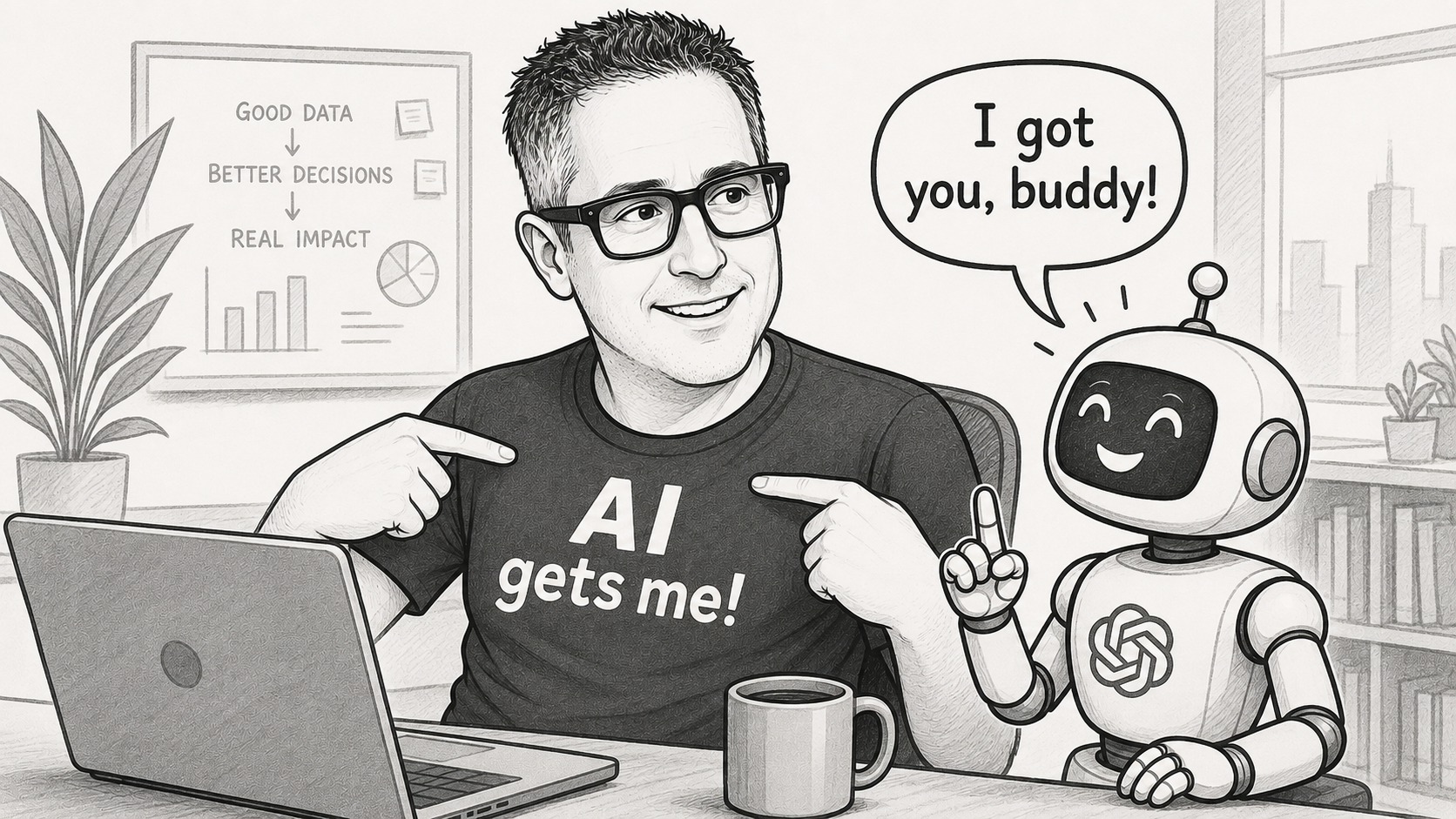
Over the past few weeks, I have had a close look at how agentic advertising may develop. I recently completed the Basics certification for the Ad Context Protocol (AdCP), an emerging open protocol for AI agents buying and selling advertising. In the course of the certification, the AI instructor prompted me to post some of my questions as GitHub issues, which led to public exchanges with Brian O'Kelley, Evgeny Popov and Nathan Woodman.
I expected to learn about a promising technical standard. I did not expect the certification itself to show me how differently professional education and standards development may work in the age of AI.
That broader context is becoming hard to ignore. Google, Meta and Amazon are pouring AI into ad matching, creative and campaign automation. Agencies are applying it to operational efficiency. Time has begun serving ads to bots. Working with Mobian, the new venture from Moat co-founder Jonah Goodhart, Time is embedding sponsored brand information in machine-readable articles to influence the answers AI assistants give people. Oracle acquired Goodhart’s previous company for a reported $850 million in 2017.
We are moving toward advertising created with machines, bought and sold by machines and, in some cases, delivered to machines to influence the advice they give people. AdCP addresses part of the infrastructure this will require.
What AdCP is designed to do
AdCP is not another version of OpenRTB, which governs auctions for individual impressions. It sits above that transaction layer, giving buyer and seller agents a common language for conducting business. They can use it to discover inventory, negotiate proposals, manage creative and exchange reporting. It makes the insertion order machine-readable.
Agents cannot efficiently negotiate across a fragmented market if each buyer requires a separate integration with each seller. A shared protocol could also help them discover and evaluate newer products such as Time’s agent-readable sponsored content. The details will change, but the need for machine-readable descriptions and transaction rules seems clear.
AdCP did not begin as a conventional standards initiative. Brian O’Kelley, a veteran ad-tech entrepreneur who helped build Right Media, AppNexus, Prebid and Scope3, joined with other practitioners to develop an open solution to a need they saw emerging before the industry had settled on a formal standard.
Learning the protocol through AI
The certification followed the same open, iterative spirit. Instead of videos, slide decks and a multiple-choice test, I learned all about the protocol through a conversation with an AI assistant called Addie. Once Addie discovered that I had worked at DoubleClick, Google and Viant during the formative years of programmatic advertising, it stopped explaining RTB basics and engaged me on the architecture. It answered questions, acknowledged uncertainty and periodically tested my understanding.
At one point I found myself thinking, “AI gets me.” The system did not merely adjust the pace of a fixed course. It drew on my professional background and current interests, and the conversation soon went beyond the course material. Before long, I was contributing ideas to the project itself. The project leaders had built an effective certification course around an LLM chatbot, something I had never encountered before.
Bringing experimentation to AdCP
My work focuses on incrementality measurement and randomized experiments. As Addie and I discussed the protocol, I began asking how an agentic media-buying system would support experimentation, including geographic treatment and holdout groups, seller commitments not to deliver in excluded markets, geo-level reporting, and tests involving Sponsored Intelligence. To my surprise, Addie drafted four GitHub issues from our conversations during the certification course. I posted them, and Brian responded to all four soon afterward.
Brian clarified that AdCP already supported binding DMA inclusions and exclusions and showed exactly how they could be used to create geographic treatment and holdout groups. But the discussion surfaced a broader limitation: DMAs are U.S.-specific and too coarse for many experiments. Evgeny Popov, a founding member of AdCP and Global Head of Enterprise at Samba TV, subsequently proposed extending the same mechanism to global cell systems such as H3. Nate Woodman, an ad-tech veteran and founder of Proof in Data who has developed a spatial-temporal framework for cross-channel advertising measurement, helped refine how those cells should represent the uncertainty surrounding a location. The resulting approach could allow buyers and sellers anywhere to define treatment and holdout areas at an appropriate scale, enforce the same boundaries and match advertising exposure with geographic sales outcomes.
I came away with a genuine sense of accomplishment. I had brought my experience designing advertising experiments to an emerging protocol, and Brian, Ev and Nate engaged directly with my ideas. Our exchanges produced a concrete proposal to improve how AdCP supports geographic experiments. In previous efforts to influence industry protocols through top-down, committee-driven processes, my suggestions had simply been ignored. Here, the open development process gave my subject-matter expertise a genuine opportunity to shape the protocol.
Where AdCP fits in agentic advertising
AdCP is not the only effort shaping agentic advertising. IAB Tech Lab’s Agentic Advertising Management Protocols, or AAMP, builds agent workflows on existing standards such as OpenDirect, AdCOM and the Deals API. Its buyer and seller agents address some of the same management-layer functions as AdCP, including discovery, negotiation, ordering and reporting.
The IAB's Agentic Real-Time Framework, or ARTF, addresses a different layer. It allows an advertiser’s own decisioning model to run inside a host advertising platform at auction speed. Adam Heimlich, CEO of Chalice AI, compares this to the rise of hedge funds and quantitative trading firms, which developed proprietary algorithms rather than relying on brokers to decide what assets were worth. ARTF could give large advertisers a similar capability: they could use shared market infrastructure while retaining control of the models that determine what impressions are worth to them. In a recent pilot, Hyundai used a Chalice model deployed inside OpenX to make CTV bidding decisions for three vehicle models and is now extending the approach across its fleet.
AdCP and AAMP govern communication and transaction management among agents. ARTF brings an advertiser’s own decisioning into the auction itself. An advertiser might eventually use agents to discover and negotiate inventory, then apply its own value model when impressions become available.
These efforts also point toward greater advertiser control. Faster automated decisions are not necessarily better decisions, particularly when the platform still defines what the system is optimizing. Platform optimization reflects the platform’s data, incentives and definition of value. With ARTF, the advertiser can own the model that decides what an opportunity is worth. Open transaction protocols could allow buyers and sellers to interact through shared rules rather than remain confined within one platform’s interface and logic.
Sponsored Intelligence extends the idea further. It anticipates brands supplying structured information or sponsored responses inside AI conversations. The precise business model may change, but the need is already apparent. As AI assistants mediate more discovery and purchase decisions, advertisers will need ways to make offers and claims legible to machines while preserving disclosure, governance and measurement.
What I took away from the experience
The AdCP certification was not perfect. The assistant timed out, daily conversation limits interrupted the process, and one session ended just before it was supposed to issue the certification. But those problems were less memorable than the process itself. I enrolled to learn about AdCP. By the end, several of my questions had entered its public development process, where more experienced contributors corrected and extended them.
I do not know whether AdCP will become the dominant protocol for agentic advertising, or how it will ultimately relate to AAMP and other initiatives. But the problems it addresses are real. My experience showed me an emerging standard being developed in public, through practical use, with AI helping more people participate.
The future of advertising will not be one protocol or model. It will be an expanding system of agents creating, negotiating, buying, optimizing and sometimes consuming advertising. My first experience with AdCP made that future feel considerably less abstract.